

2025 Phoenix KEYS intern Akaisha Bahrie (she/her) learned how to use flow cytometry, a powerful technology that tags cells with glowing markers to analyze complex tissues, under the mentorship of Mrinalini Kala.

2025 Phoenix KEYS intern Akaisha Bahrie used flow cytometry to study cardiac fibroblasts, supportive cells in the heart that can become harmful if they grow too much or become overactive. Deanna Rodriguez, BIO5 Institute
Mrinalini Kala, associate research professor of internal medicine and director of the Flow Cytometry Core at the University of Arizona College of Medicine – Phoenix, uses lasers to study what happens inside individual cells.
This technique is called flow cytometry, a powerful technology that tags cells with glowing markers. These markers light up in different colors, allowing researchers to sort and study cells based on their type and activity. It’s a key method for analyzing complex tissues like blood and heart muscle.
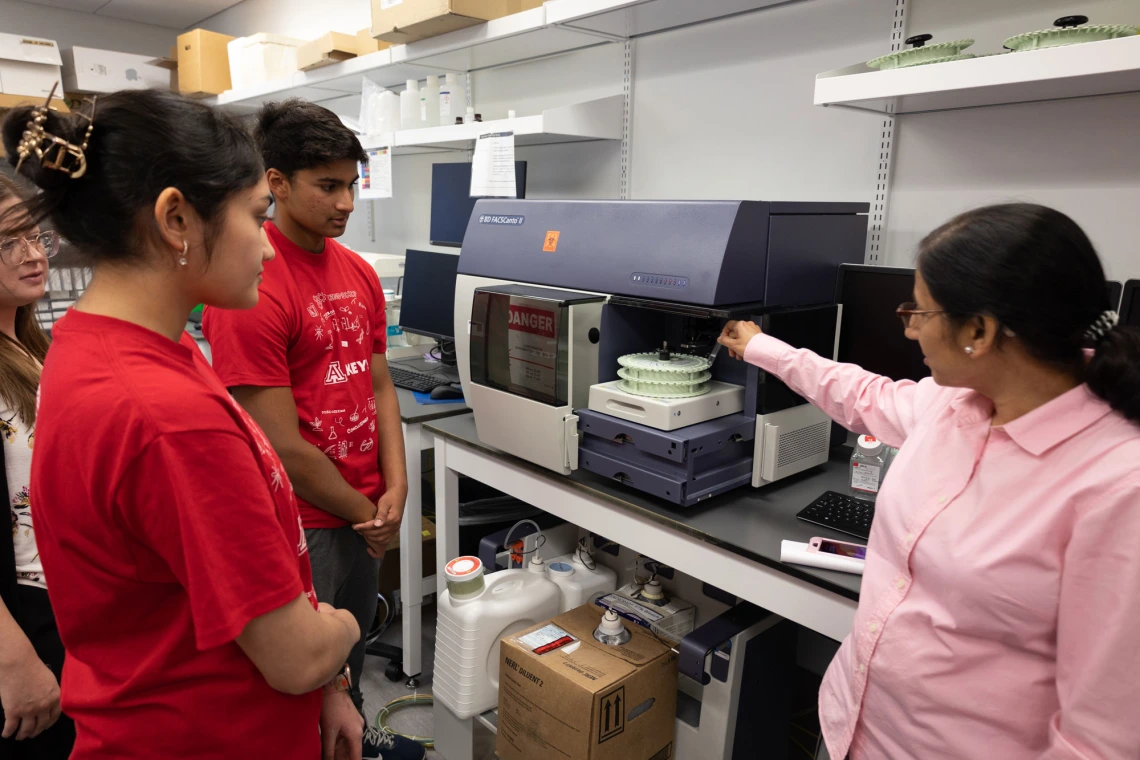
Phoenix KEYS intern Akaisha Bahrie (she/her) is using flow cytometry to study cardiac fibroblasts, supportive cells in the heart that can become harmful if they grow too much or become overactive.
“When students connect the science they’ve learned in the classroom to the real work we do in the lab, it’s very exciting,” Kala said. “They bring new ideas, energy, and perspectives. That diversity of thought is essential for moving science forward.”
Bahrie’s project explores how these cells respond when a key gene, AT1aR, is deleted. She’s also examining whether male and female cells behave differently, a question that could help explain sex-specific patterns in heart disease.
Her work contributes to a broader effort to understand the biological differences that shape heart health and influence how patients respond to treatment.
“I’m passionate about cardiology,” said Bahrie. “Being in KEYS has shown me how research can directly inform drug development. I want to keep studying the cardiovascular system, and one day become a surgeon who truly understands how the heart works from the inside out.”
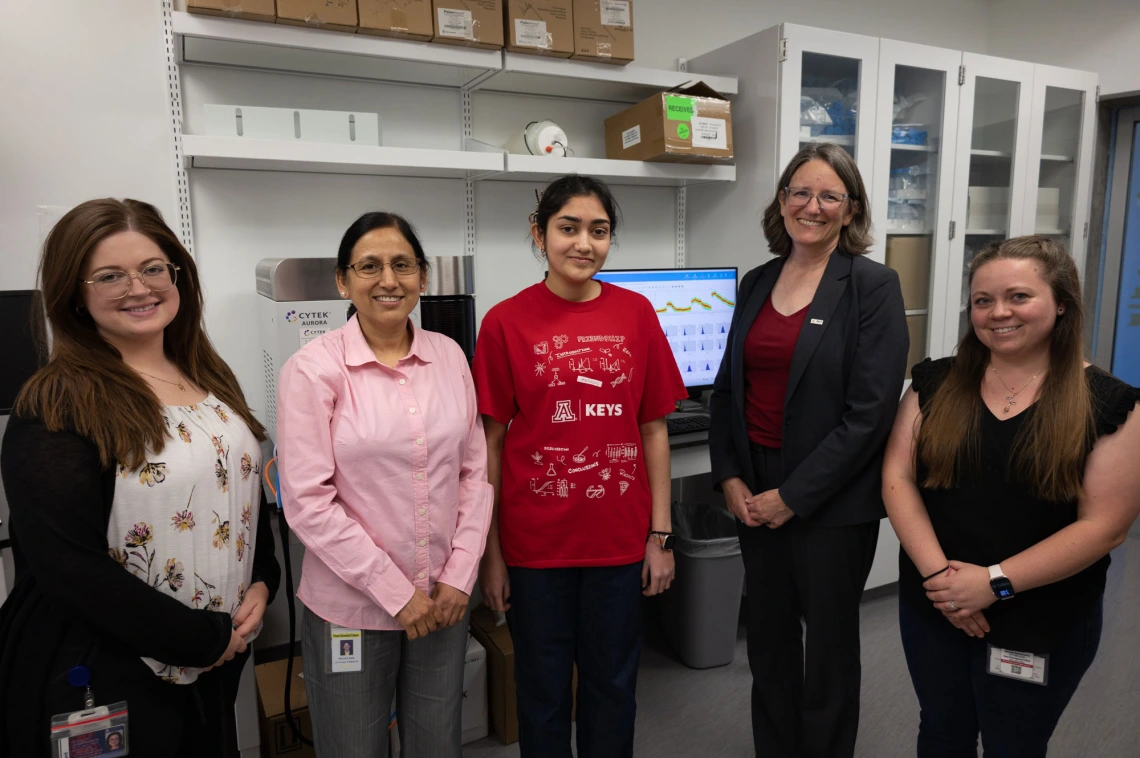
Take a closer look at how KEYS interns are helping advance real-world research across Arizona.
By: Caroline Mosley Bartelme | August 26, 2025 | Original Post