
Pandemics are unpredictable. An NAU epidemiologist is part of an international effort to make the diseases, or at least their dynamics, a little less so.
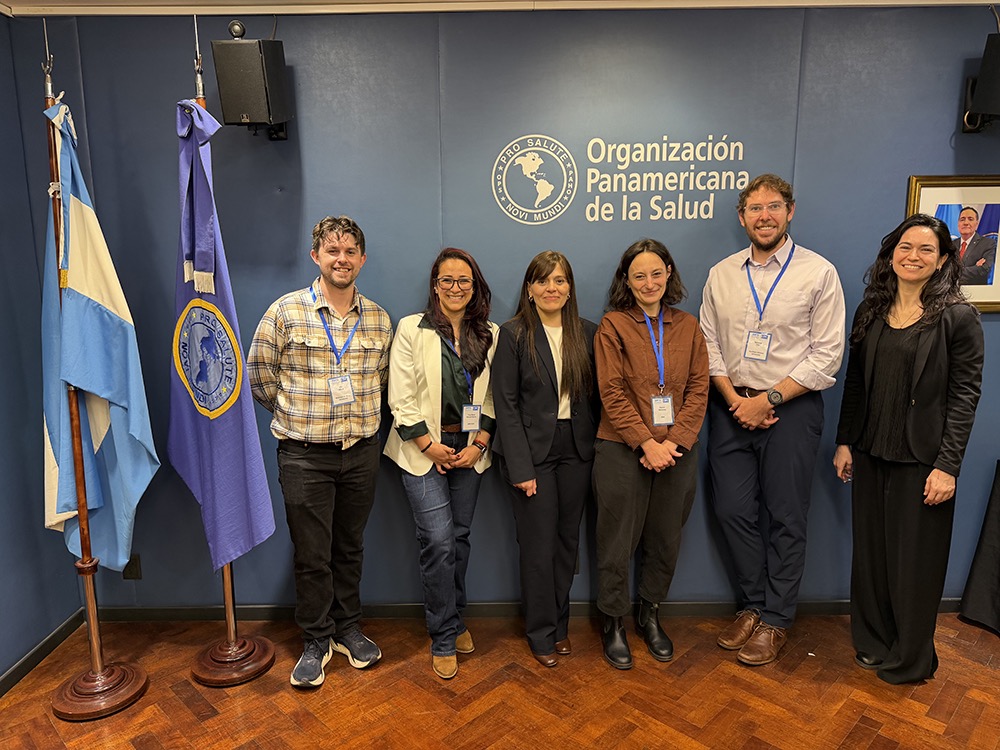
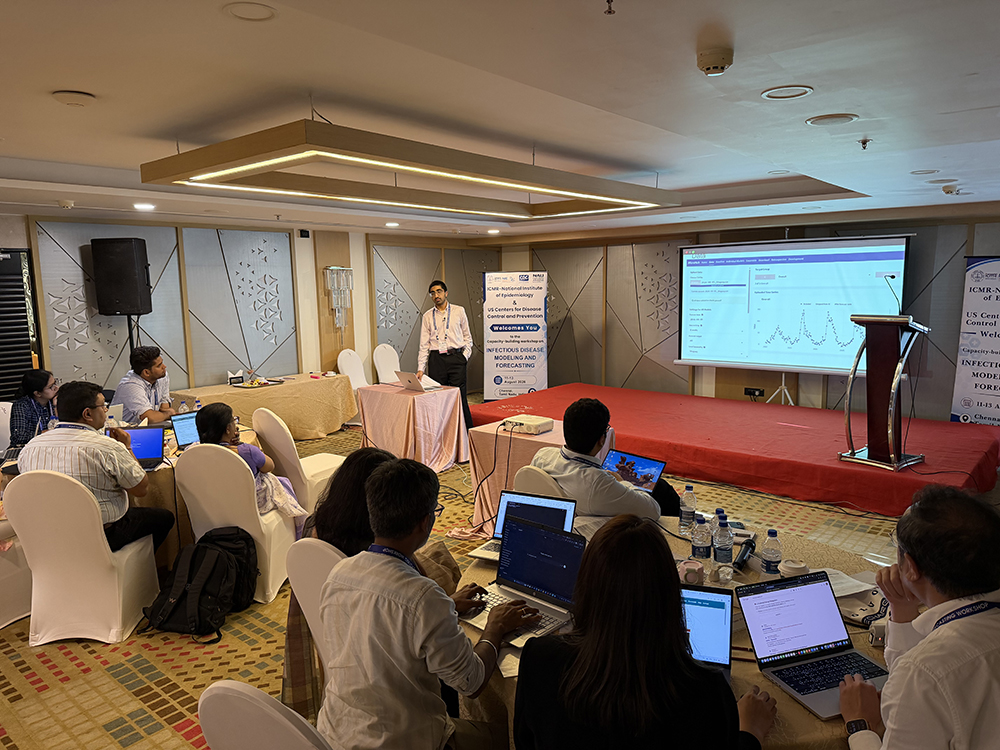
Spencer Fox, an assistant professor in the School of Informatics, Computing, and Cyber Systems, uses mathematical and statistical models to predict the behavior of illnesses like COVID-19, influenza, Ebola and Zika. For more than a decade he has been forecasting influenza dynamics in the United States. This year, he expanded his work internationally, spending time in South America and India training public health officials to better anticipate seasonal epidemics and emerging threats.
Real-time forecasting can be a game changer in public health, just as it is in weather. Predictions give cities and regions advance warning of increases in infections and hospitalizations, giving officials precious time to prepare a response. Even so, infectious disease forecasting is a young field, and researchers often struggle to accurately predict the size and timing of seasonal diseases like influenza.
“If we can’t reliably forecast an influenza epidemic that we see every year, how can we be ready to forecast the course of the next pandemic?” Fox said.
To improve forecasts, Fox is testing his models in places where forecasting has not historically happened—from individual communities in the U.S. to countries south of the equator. The goal is to give public health officials virus forecasts that can save and improve lives in their own communities.
Forecasting closer to home
One thing Fox and his colleagues saw during the COVID-19 pandemic was that national and state-level forecasts weren’t specific enough. Public health officials needed local forecasts to make informed decisions. Fox saw this firsthand while working with the City of Austin, where a model developed by his team helped officials better anticipate the city’s healthcare needs.
“Like the weather, disease patterns vary significantly from place to place,” Fox said. “Public health decisions are made locally, so the forecasts need to be local too.”
In response, the CDC created the Center for Forecasting and Outbreak Analytics and later launched InsightNet, a network of academic institutions and state, territorial, local, and tribal public health (STLT) agencies working together to improve and scale analytic tools such as forecasts. Fox is part of epiENGAGE, a member of Insight Net, who are producing US metropolitan region forecasts tailored to the communities decision makers serve.
Building forecasting capacity around the world
Until recently, only a few countries had the resources to produce real-ime disease forecasts. Fox has been working to expand that capability by turning forecasting tools developed by his team in the U.S. into accessible tools that can be used elsewhere.

The work started with a pilot program in Paraguay, where Fox and his collaborators found that models developed for U.S. influenza could be adapted to produce real-time forecasts in the Southern Hemisphere. This year, he spent the summer traveling between Arizona and a few South American countries and India to train public health officials on forecasting respiratory diseases.
“A model that works here in the U.S may not work as well elsewhere,” Fox said. “Testing these tools across different countries and disease patterns pushes our models in new directions and ultimately helps us build better forecasts everywhere.”
Expanding forecasting capacity abroad also improves the broader picture of how respiratory diseases are spreading around the world. Because flu seasons occur at different times in the Northern and Southern hemispheres, forecasts from one can provide helpful clues as the other prepares for its own flu season.
Read about Fox’s work in Chile.
Preparing for the next pandemic
For Fox, the local and global forecasting efforts are part of the same larger goal: improving how we respond to seasonal epidemics while building the systems and expertise needed for the next pandemic.
“Every flu season gives us an opportunity to test our models, learn where they fail and make them better,” Fox said. “That helps us respond better now, but it also helps us build the muscle we’ll need when the next pandemic arrives.”
His lab is now working to bring those lessons together by integrating data from different diseases, locations, scales and sources into a more unified forecasting system.
“The goal I have for my lab over the next five years is to synthesize all of this data into a single forecasting framework that can make accurate predictions from the local to the global scale,” Fox said. “We’re using machine learning and artificial intelligence approaches to help connect those different scales and learn from data collected around the world.”
Heidi Toth | NAU Communications | heidi.toth@nau.edu | Original Article