
ASU expert answers questions about risk, prevention and the role of El Niño
Earlier this month, hantavirus made local headlines following a confirmed death due to the rodent-borne virus in Mohave County.
Though the case is unrelated to the hantavirus outbreak on a cruise ship earlier this year, it highlights the need for caution for the rare, but deadly disease.
“Usually we see fewer than five cases every year in Arizona,” said Dave Engelthaler, executive director of the Health Observatory at Arizona State University. “Though in the last two years, we’ve been seeing an increase to seven to eight cases per year, which is pretty unusual.”
Cases may increase further with the arrival of a “super” El Niño in Arizona this summer, which is projected to bring higher temperatures and heavy monsoon rains.
ASU News spoke with Engelthaler about the risks of hantavirus, how our environment, animals and human health are interconnected, and what residents can do to protect themselves from this deadly disease.

Note: Answers have been edited for length and clarity.
Question: How concerned should Arizonans be about hantavirus right now?
Answer: Hantavirus in Arizona is incredibly rare. Furthermore, the strain we have in the Southwest and Arizona is the Sin Nombre virus, which is different from the strain on the cruise ship and does not spread person to person. It is a very serious disease with a fatality rate of about 30 to 40%, but it is quite rare.
Q: Who in Arizona is at highest risk of hantavirus?
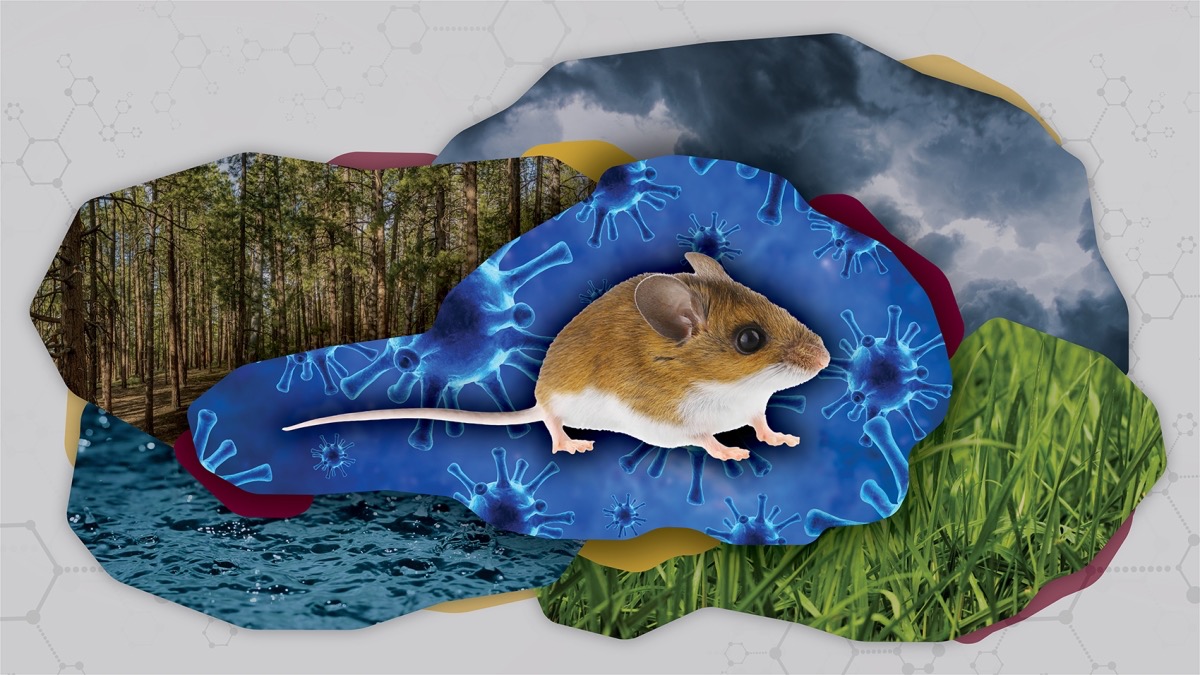
A: The Sin Nombre strain of hantavirus is tied to a particular kind of mouse called a deer mouse. This mouse is found throughout the West, and particularly in Northern Arizona. So people who are in close proximity to wild mice are the ones at highest risk — people with cabins or structures that wild mice can get into. But even down in the Valley we have a risk, especially on the outskirts, where people can get wild mice in their homes.
Q: So how can people protect themselves from the disease?
A: Prevent mice from getting into your home or outbuildings by trapping or blocking off their entry. We’re most at risk of coming in contact with wild mice and their droppings — which spreads the disease — in garages, sheds and the like.
If you see mouse droppings or nesting materials, do not sweep or vacuum them up. That can stir the virus into the air. Instead, spray droppings down with 10% bleach, Lysol or a similar cleaning solution that is labeled as “viricidal” and let it soak for about 10 minutes. Then use wet rags to clean the area, and wear gloves and a HEPA filtered mask, when possible, while cleaning up an area of rodent activity.
Q: What is the connection between El Niño and hantavirus outbreaks?
A: In 1993, the Southwest’s Four Corners hantavirus outbreak resulted in 33 cases and 17 deaths. That outbreak followed a strong El Niño in 1992, which brought unusually heavy rainfall to the region.
When a lot of water enters a typically dry system, it triggers rapid plant growth, creating more food and shelter for rodents. As rodent populations grow, they interact more frequently and spread viruses among themselves. The result is more rodents carrying hantavirus and a greater chance of human exposure.
That’s why hantavirus risk tends to increase after strong El Niño events. Forecasters are predicting what some are calling a “super” El Niño this year. While we can’t know exactly what will happen, we can anticipate the same chain of events: increased rainfall, larger rodent populations, more infected rodents and potentially a higher risk of human cases.
Q: Does this reveal something about the broader relationship between climate, wildlife and human health?
A: It speaks to the concept of One Health, which views the environment, animals and humans as interconnected parts of the same system. Many of the diseases that affect people originate in nature, so understanding how pathogens circulate in the environment and among animals helps us better understand their impacts on human health. The potential link between El Niño and increased hantavirus risk is a good example. Changes in weather affect the environment, which affects animal populations and disease transmission patterns, ultimately influencing the risk of human infection.
By Pete Zrioka | June 22, 2026 | Original Story