

2025 Phoenix KEYS intern Ayana Jain (she/her) worked in the lab of Isabelle Schrauwen and studied the genetic causes of rare hearing conditions that begin before birth.
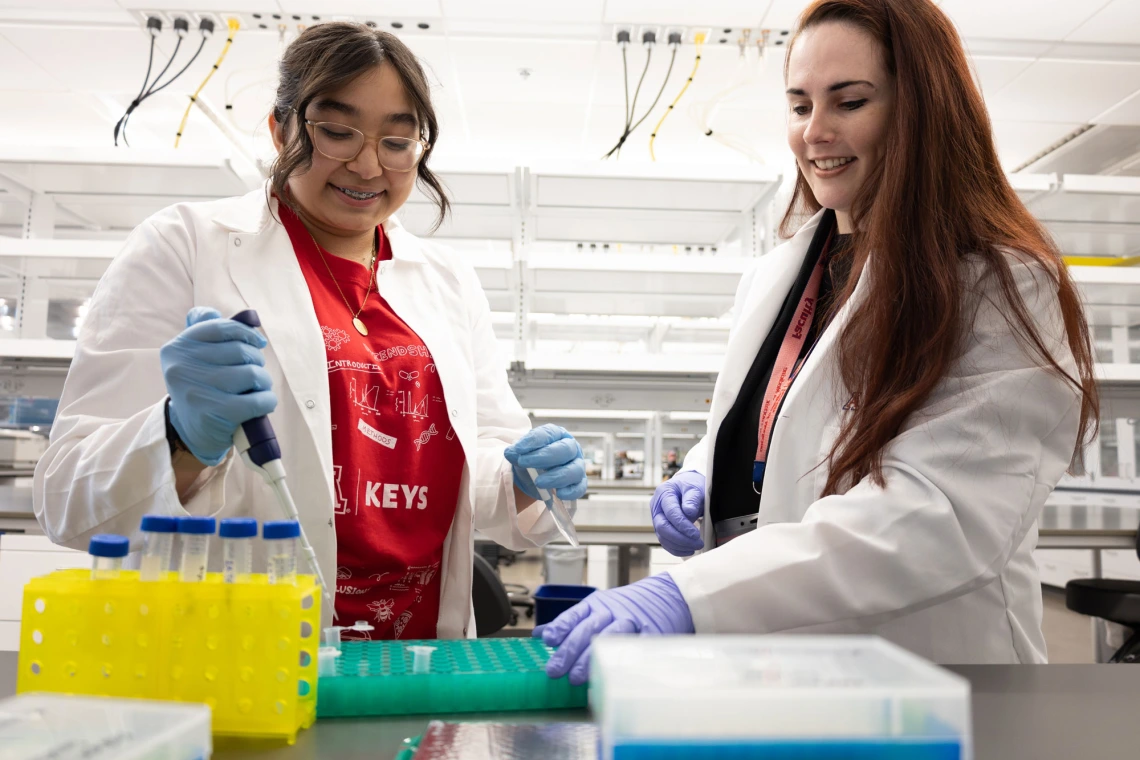
In the lab of Isabelle Schrauwen, associate professor of translational neurosciences at the University of Arizona College of Medicine – Phoenix, scientists study the genetic causes of rare hearing conditions that begin before birth. Some children are born without key inner ear structures, which makes it difficult for devices like cochlear implants to restore hearing. By examining the DNA of these patients, Schrauwen’s team hopes to understand how hearing develops and find better ways to treat those with severe, early-onset hearing loss.
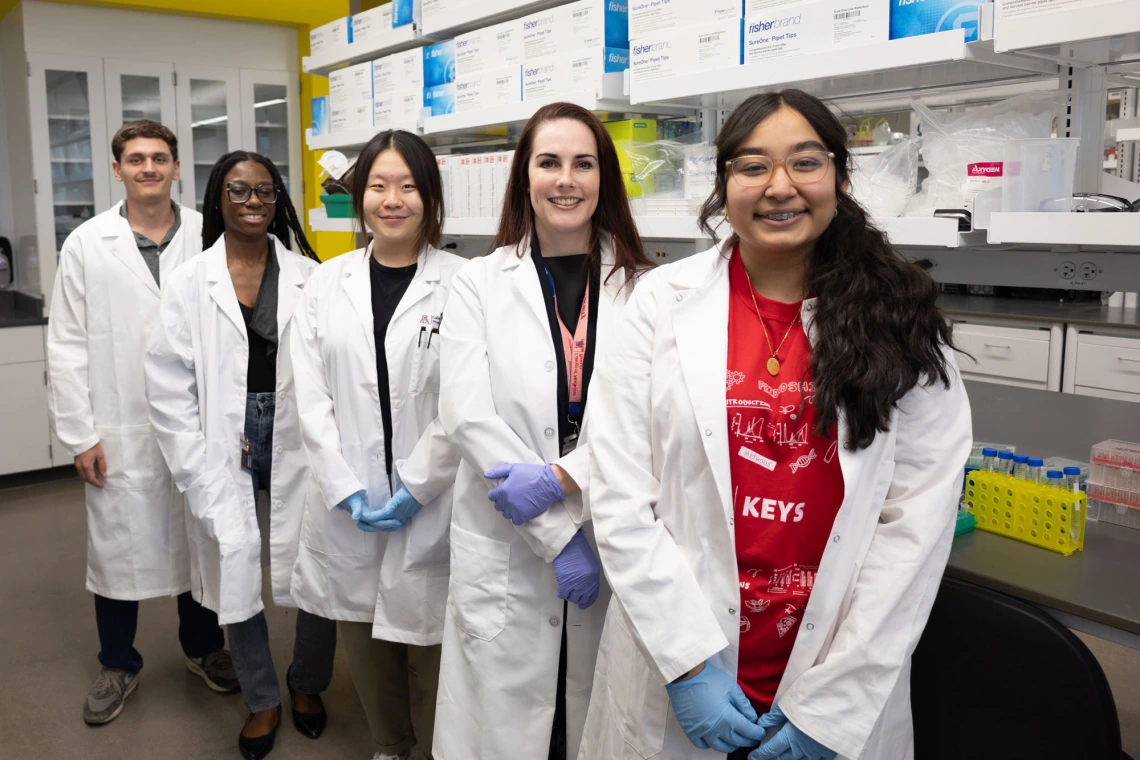
Phoenix KEYS intern Ayana Jain (she/her) helped reanalyze genetic data from children with these complex conditions, working with research scientist Anu Acharya and bioinformatician Yasmin Rajendran.
“Students sometimes ask questions we never even think about,” said Schrauwen. “In genetics, we often reanalyze data, and we always say a different pair of eyes find different things. It’s exciting when they find something—because we’re all excited too.”

Jain searched for small differences in DNA, called variants, that may be responsible for hearing loss.
“Having Ayana on this project has been reinvigorating,” said Acharya. “Her energy and questions drive us to look deeper. She made us more enthusiastic to explore a dataset we had set aside.”
Rajendran added: “Everyone is a piece of the puzzle and Ayana has been a key part of solving it.”
Although her work is primarily computational, Jain is also learning lab techniques that can help confirm whether these variants affect the genes that guide ear and nervous system development.
“Two of my cousins have neurodevelopmental disorders,” said Jain. “I want to go into medicine, and this project connects to what I really care about: helping children with conditions we don’t yet fully understand.”
Take a closer look at how KEYS interns are helping advance real-world research across Arizona.
By: Caroline Mosley Bartelme | August 12, 2025 | Original Post